Name: Bethanie Majewski University: Marian University Major/Minor: Biology major with a minor in pastoral leadership Semesters as a Field Atlas Ambassador: This is my first semester!
What do you enjoy most about the role?
I enjoy getting the chance to discuss agbiosciences with individuals who may have never heard of them. I also really enjoy hosting events and meeting people!
What has surprised you most about the agbiosciences?
Agbisociences being a $58.1 billion industry in Indiana was the most surprising to me because it highlights how large of an impact agbiosciences has on society in Indiana’s economy.
Which agbioscience company interests you most, and why?
The agbioscience company that interests me most in Corteva Agriscience because it is a corporation focused on enriching the lives of all individuals through agriculture.
How can students get in touch with you?
Students can get in touch with me on campus or via email! I am always open and excited to discuss Field Atlas.
Governor Eric Holcomb has proclaimed March 19 as National Ag Day in Indiana.
“Agriculture is the backbone of our rural communities, and this sector is a large employer of Hoosiers and contributes so much to our state, both economically and socially,” said Lt. Gov. Suzanne Crouch, Secretary of Agriculture and Rural Development. “Today, we not only celebrate all Hoosiers involved in any capacity, but we thank them also!”
National Ag Day, March 19, 2024, highlights agriculture’s contributions to our state and local economies and allows producers, agricultural associations, corporations, universities, government agencies and countless others across America to recognize and celebrate the abundance provided by American agriculture.
Indiana is the ninth largest agricultural producing state in the country. The state has over 94,000 farmers, and agricultural production is valued at over $18 billion. Indiana farmers cultivate over 14.6 million acres and establish over 47,000 soil conservation practices each year which kept an estimated 1.8 million tons of soil in the farm fields.
Indiana’s top commodities are:
Number one producer of popcorn, gourds and duck
Number two producer of pumpkins
Number three producer of spearmint, turkeys and total eggs
Number four producer of peppermint and soybeans
Number five producing state for corn and hogs
Number six producer of watermelons
Number ten producing state for maple syrup and hemp for floral (CBD and other cannabinoid usage)
“Indiana’s agriculture breadth is deep and wide. We have traditional row crop farmers and animal producers, we have farmers who grow popcorn for movie theaters and corn for tortilla chips, we have food manufacturers who make snack cakes that are beloved worldwide, and we have organic farmers and farmers that sell directly to restaurants and consumers,” said Don Lamb, ISDA director. “My favorite part about agriculture in Indiana is that everyone has a seat at our table. Today, we honor them and extend our gratitude.”
This marks the 10th consecutive year on the list for Warsaw. Of the 100 ranking micropolitan (micro) areas, Warsaw came in at number 17, up from number 44 the previous year, and tying respectively with 11 other cities including neighboring Huntington.
Rankings are based on the impact made by local business investment and expansion projects. Qualified projects must meet at least one of three criteria: involve a capital investment of at least $1 million, at least 20,000 SF in new or expanding construction, or the addition of 20 new jobs. Retail, government, school, and hospital projects are not factored into the analyses.
With more than 500 micropolitan areas in the United States, Site Selection’s list of “Top 100 Micros” puts Warsaw in the top 20% in the country.
“We are proud to be a part of such a vibrant and growing community,” said Kosciusko Economic Development Corporation (KEDCO) Chairman of the Board of Directors Blaine Conley. “We’re grateful for the continued investments by local industry in Warsaw and throughout Kosciusko County.
Indiana came in third overall for “2023 Top States” based on the number of “Top 100 Micros,” with 13 Hoosier cities making the list, just trailing Ohio and Georgia who tallied 15.
From major companies to startups, one thing holds true from Amazon Web Services: they start with the customer in mind and work backwards. This week, we are joined by an agtech veteran and now the company’s Head of Worldwide Business, Agriculture, Elizabeth Fastiggi. She dives into their service across the whole value chain, how companies use AWS and the role of artificial intelligence (AI) in its stages of early adoption.
Elizabeth also talks new applications and ensuring innovation is accessible. She talks Amazon’s Project Kuiper to increase global broadband access, providing service to early customers by the end of 2024 and agriculture’s opportunity to be in the midst of the early customer base.
As an environmental science major, did she ever think she’d be here? Elizabeth gets into spotting the opportunities to make a difference using innovation and how she sees the future of agtech.
The company plans to expand with the new funding, opening a second plant.
PawCo Foods, the AI-powered plant-based pet nutrition brand, has secured $2 million in seed funding led by Elevate Ventures and supported by angel investors, including Arash Ferdowsi, co-founder of Dropbox. Founded by former Impossible Foods scientist Dr. Mahsa Vazin, PawCo aims to revolutionize pet nutrition by offering high-quality, sustainable and scientifically-formulated plant-based food for dogs.
With the funding, PawCo plans to open a second production facility in the Midwest, complementing its existing California location. The investment will also support growth, research and development, and marketing efforts to raise awareness in the plant-based pet food category.
Christopher Day, CEO of Elevate Ventures, expressed excitement about PawCo’s vision to bring innovation to pet nutrition and democratize access to nutritious and eco-friendly pet food. Dr. Vazin’s expertise, as a former scientist at Impossible Foods, led to the integration of AI technology for nutrition optimization and the creation of GreenMeat, the first fresh plant-based meat for dogs.
PawCo’s core products include InstaBites, a shelf-stable, plant-based dog food for convenience and affordability; LuxBites, a premium option for gut health and immunity; and GreenBites, featuring fresh frozen meals with essential nutrients in flavors like Peanut Butter & Apple or Blueberry & Veggies.
Dr. Mahsa Vazin, CEO and founder of PawCo, highlighted its commitment to providing healthy and sustainable options for pet owners while contributing to a safer planet. Traditional, meat-based dog foods have been linked to health issues, and PawCo offers a plant-based alternative without compromising taste.
Doing good by doing well – it’s a concept the AgriNovus Indiana team embraced when the HungerTech Innovation Challenge was launched. Three years later, it’s still going strong; and new solutions are hitting the market that better connect food supply with food demand.
The 2024 HungerTech tasks innovators with developing market-driven tech models that ensure increased and equitable food distribution that is both environmentally sustainable and economically viable. The winning team will receive $25,000 to help accelerate commercialization of their solution.
Solutions could find, but are not limited to, opportunities for innovation in the following areas:
Infrastructure – current critical inefficiencies exist in capturing, managing and redirecting surplus food from points of excess – such as producers and retailers – to communities grappling with food insecurity (this is exacerbated for perishable goods).
Forecasting – deployment of tools for accurately forecasting the production of surplus food and quantifying demand from food-insecure populations have significant deficiencies.
Preservation – there are shortfalls in current food preservation technologies to prolong shelf life of perishables without detracting nutritional value or safety.
Registration to join this year’s HungerTech Innovation Challenge closes March 12. Learn more and connect with Geoff at agrinovusindiana.com/hungertech.
HungerTech Innovation Challenge to focus on developing tech models that increase equitable food distribution, environmental sustainability and economic viability
AgriNovus Indiana, an initiative to grow the state’s agbioscience economy, released new secondary research today identifying the need for market-driven technologies that ensure increased and equitable food distribution to eliminate hunger.
The study was conducted by Purdue University student, Tushar Sonvani, to inform the scope of the 2024 HungerTech Innovation Challenge that tasks innovators with creating and implementing tech-enabled business solutions that connect food supply with food demand. A winning solution will receive $25,000 to help accelerate commercialization of their solution.
“Combatting food insecurity requires a portfolio of solutions, and it’s clear that innovation presents tremendous opportunity to unlock new ability to better connect food supply with food demand,” said Mitch Frazier, president and CEO of AgriNovus Indiana.
Entitled Addressing Food Insecurity and Waste in the United States Through a Market-Driven Model, the research shows a significant paradox in the United States where nearly 12 percent of households face food insecurity while up to 40 percent of our nation’s food supply is discarded annually. This stark contrast is exacerbated by logistical inefficiencies, inaccurate demand planning and unequal access to information about the availability of food and nutrition.
The study unveils a key set of challenges that need to be solved to eliminate food insecurity, including:
Logistical gaps in the food supply chain: current critical inefficiencies exist in capturing, managing and redirecting surplus food from points of excess – such as producers and retailers – to communities grappling with food insecurity (this is exacerbated for perishable goods).
Inadequate demand planning and forecasting: deployment of tools for accurately forecasting the production of surplus food and quantifying demand from food-insecure populations have significant deficiencies.
Preservation: there are shortfalls in current food preservation technologies to prolong shelf life of perishables without detracting nutritional value or safety.
“The challenges that face food insecurity are numerous, systemic and widespread,” said Tushar Sonvani, Purdue University student and author of the study. “Participating in the HungerTech Research Sprint creates a new way for entrepreneurial minds to tackle these challenges head on with more than one solution to better connect food supply with food demand.”
Registration for the HungerTech Innovation Challenge closes on March 12. To learn more and register a team for this year’s Challenge, click here.
The full study, Addressing Food Insecurity and Waste in the United States Through a Market-Driven Model is available at www.AgriNovusIndiana.com.
Key Takeaways:
Comprehensive Data Analytics Suite: Access AGMRI Insights and AGMRI Analyze for full-season analytics during the 2024 crop season.
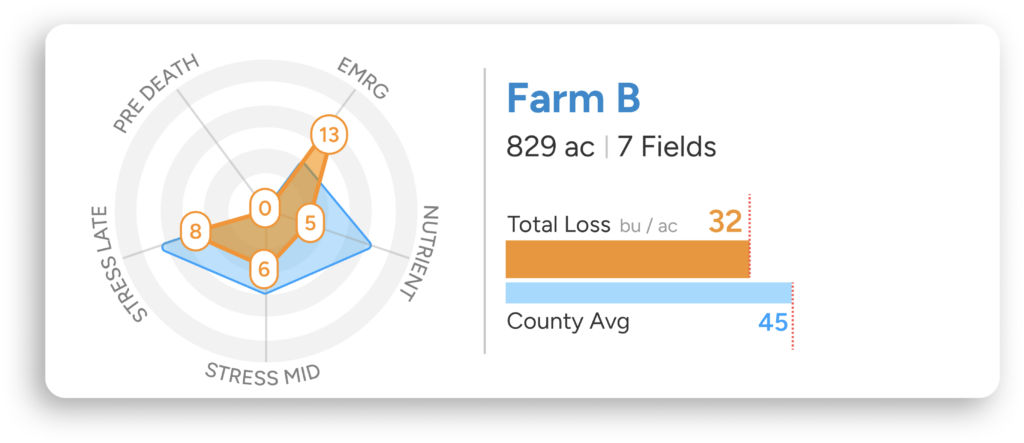
Yield Potential Focus: AGMRI Analyze tracks nine common yield-limiting factors.
Strategic Decision Support: Utilize a comprehensive report for informed decision-making in preparation for the next year’s crop season.
Intelinair, the makers of AGMRI and a leading ag data analytics company, announced the latest addition to its suite of data analytics for the 2024 crop season – AGMRI Analyze. AGMRI Insights, the in-season analytics suite, will continue to be available to inform real-time data-driven decision-making.
AGMRI Analyze monitors nine common yield-limited factors, enabling farmers to pinpoint and understand potential issues that have impacted their yield during the season. This data-driven approach helps farmers make informed decisions for the upcoming crop season, ultimately contributing to improved efficiency and yield potential.
“With the addition of Analyze, we have created a more complete data analytics package that farmers can rely on for both in-season monitoring and postseason analytics,” said Tim Hassinger, Intelinair president and CEO. “Our team identified nine common rate-limiting factors based on feedback from AGMRI users, and we’ve integrated them into this new capability for the 2024 season. By consolidating in-season and postseason analytics into a unified platform, we’re taking real-time and postseason data-driven decision-making to the next level.”
Highlights of AGMRI Insights and AGMRI Analyze:
Covers in-season agronomic insights:
Emergence
Weeds
Crop Health – Disease, Nutrient Deficiency, and Underperforming Areas
Variable Dry Down
Covers postseason data analytics:
Emergence
Nutrient Availability
Crop Stress
Disease
Hybrid and Variety
Weather
Soil
Machine
Crop Input Product Performance
Use Case: Using AGMRI Analyze to Measure Emergence Impact on Yield
Measured emergence helps farmers determine the emergence percentage and how well hybrids or varieties performed. With this information, a farmer can explore which hybrids or varieties had a combination of good emergence and yield and answer key questions for planning for the next crop season.
Potential Impact on Yield
AGMRI Analyze measures every plant throughout the field for emergence and can correlate actual emergence back to many factors to help understand which ones impacted emergence and the final field yield.
Key Data Provided:
Emergence % = Emerged Plants/Planted Seeds
Yield/1000 Plants = Final Yield/1,000 Emerged Plants
Questions for Next Year’s Crop Season Planning
Do I need to adjust my planting rates
How does my emergence compare to others?
Am I getting a good yield for emerged plants?
Any tillage or residue management changes needed?
Did the planting date impact emergence?
“If a hybrid or variety had poor emergence but still produced a good yield per 1,000 plants, a farmer can explore varied factors such as soil conditions, soil types, weather, planter speed, and other factors that might have limited the emergence potential of those specific hybrids and varieties,” said Conner Schmidt, Intelinair national sales leader. “If good emergence relative to planted rate exists and a poor yield occurs, then a grower may want to reconsider the placement of those hybrids and varieties or possibly eliminate them altogether from their product selection.”
Schmidt added, “Other factors to investigate are nutrient deficiencies, disease, or crop stress on how they impacted the final yield.”
For more information about Intelinair, AGMRI Insights and AGMRI Analyze, or how to sign up for the 2024 season, visit https://www.intelinair.com/agmri.
About Intelinair Intelinair provides whole field insights all season long to farmers and ag retailers through its easy-to-use interactive platform, AGMRI. Through AGMRI Insights and AGMRI Analyze, Intelinair’s proven data analytics capabilities tracks every acre, every factor – emergence & population impacts, nutrient utilization, hybrid and variety performance, and even weather impact – for data-driven in season and postseason decision making and identifies sustainability opportunities. Learn more at Intelinair.com or visit our social media channels.
Breakthrough software and services reduce grower resource usage and costs while increasing volume and quality
Boyd Street Ventures announced that it has become the lead investor in VinSense, LLC, whose innovative decision support software system and services enable agricultural crop producers to optimize their use of water, fertilizers and other resources while increasing their crop yields, quality and prices.
VinSense’s mission is to address the serious challenges faced by crop growers due to climate change and rising costs of water, labor, fertilizers and other resources. The company has developed a proprietary and highly effective approach to precision soil management to meet growers’ needs.
“VinSense technology transforms soil data, microdata, historical data and precision soil maps into intuitive, easy-to-use visual information to increase the effectiveness of the decisions growers make throughout the season,” said Dr. David Ebert, developer of the technology and VinSense Co-Founder and Chief Technology Officer. “This allows growers to optimize water and resource management to achieve the best possible combination of quantity, quality, uniformity and cost from their crops.”
VinSense’s customers include numerous California and Washington wineries, including Robert Biale Vineyards, Cakebread Cellars, Francis Ford Coppola Winery, Ridge Vineyards, and Silver Oak. The company will be moving its headquarters from Northern California to Norman, Oklahoma, where Dr. Ebert is Gallogly Chair Professor of Electrical and Computer Engineering and the Director of the Data Institute for Societal Challenges.
“We’re very excited to become the lead investor in a Smart Agriculture innovator that brilliantly and economically addresses many of the most serious threats climate change and rising costs are creating for growers of wine grapes and other important crops,” said James Spann, Boyd Street Ventures Founder and General Partner. “We’re also very proud that VinSense is relocating to our home city of Norman, and we look forward to helping the company grow its revenues and create new job opportunities for Oklahomans.”
ABOUT BOYD STREET VENTURES
Boyd Street Ventures is a groundbreaking, early-stage venture capital firm connecting institutional and other investors to high-growth investment opportunities founded and developed by entrepreneurs from Oklahoma and elsewhere. BSV places Pre-Seed, Seed, Series A and follow-on investments in the Life Sciences, FinTech, Energy Tech, Aerospace & Defense, and Climate Tech sectors. The firm focuses on under-the-radar startups that are less likely to have their prices overbid and overpriced than startups targeted by larger VC firms on the East and West Coasts. This focus, coupled with its unusually active involvement in providing de-risking strategic and operational counsel to its portfolio companies through its Boyd Street Venture Studio, enables BSV to target above-average returns for its investors. For more information, please visit https://www.boydstreetventures.com/
Name: Julia Hamblen University: Purdue University Major/Minor: Agricultural Education with a Wood Products Manufacturing Technology Minor Semesters as a Field Atlas Ambassador: 5 Semesters
What do you enjoy most about the role?
I enjoy having the creative freedom to discover new ways to educate others on AgBioScience. I love everything about education, and this role allows me to conduct this in new and innovative ways all the time.
What has surprised you most about the agbiosciences?
It never ceases to amaze me how AgBioScience is an industry that truly affects every single person on this planet no matter where we are. I think it is so cool to be able to advocate and educate on an industry that touches all of us and to watch those “ah-ha” moments when I am talking to someone else about AgBioScience when they realize how cool the industry is as well.
Which agbioscience company interests you most, and why?
I may be a little biased, but I will have to say Indiana Soybean Alliance. I had the chance to intern with them in the summer of 2022, and it was one of the best experiences I have ever had. I had the chance to work in the Glass Barn and see all of the behind-the-scenes of renovating it that summer, and it was such a fun process to see progress and watch all of the kids learn about soybeans. Seeing their efforts surrounding education was exciting to be a part of.
How can students get in touch with you?
I can be reached at my AgriNovus email, [email protected].